+8613706519013
 BHC Polimer Adalékanyagok Kft., Ltd. / Shanghai Crystal Wells Chemical New Materials Co., Ltd.


In rubber manufacturing, accelerator selection affects more than vulcanization speed. The way an accelerator is dispersed into the rubber compound can also influence mixing consistency, processing stability, cure performance, and final product quality. This is why TMTD(TT)-80 pre-dispersed rubber chemicals are increasingly considered for controlled and efficient rubber compounding.
But how does TMTD(TT)-80 actually work? The key is its pre-dispersed structure, which allows the active rubber accelerator to be distributed more consistently throughout the compound during processing.
What Is TMTD(TT)-80?
TMTD, or Tetramethylthiuram Disulfide, is a thiuram-type rubber accelerator commonly used in sulfur vulcanization systems. The “80” in TMTD(TT)-80 generally indicates an approximately 80% active ingredient concentration, with the remaining portion consisting of a polymeric carrier and processing-related components.
Unlike conventional powdered TMTD, TMTD(TT)-80 pre-dispersed masterbatch is manufactured by incorporating the active chemical into a suitable carrier. The result is a granulated or pelletized material designed to release and distribute the accelerator during rubber mixing.
This approach changes how the chemical behaves during processing. Instead of relying entirely on mechanical mixing to distribute fine accelerator powder, the pre-dispersed material is designed to enter the rubber compound in a more controlled and uniform form.
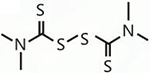
How Does TMTD(TT)-80 Work During Rubber Compounding?
The working principle can be understood through three connected stages: incorporation, dispersion, and activation.
During the initial mixing stage, TMTD(TT)-80 is added to the rubber compound according to the formulation. The carrier helps the material integrate into the rubber matrix while the active TMTD becomes progressively distributed through the compound.
As mixing continues, the active accelerator becomes available throughout the rubber matrix. Good dispersion is important because the accelerator needs to be present where vulcanization reactions will occur.
This makes chemical dispersion an important factor in rubber compounding. If an accelerator is unevenly distributed, different areas of the compound may receive different effective concentrations. That can contribute to variations in curing behavior and ultimately affect product consistency.
With a well-designed pre-dispersed masterbatch, the chemical is supplied in a form intended to improve handling and distribution during mixing.
What Happens During Rubber Vulcanization?
After mixing and forming, the rubber compound enters the vulcanization process. In a sulfur curing system, TMTD functions as an accelerator that helps promote the chemical reactions responsible for crosslinking the rubber.
The accelerator works together with sulfur and other formulation ingredients to influence the curing process. Depending on the rubber type and overall formulation, TMTD can contribute to faster cure behavior and the development of the required crosslinked structure.
However, accelerator performance does not depend on TMTD alone. The final cure characteristics are affected by the entire formulation, including sulfur level, accelerator combinations, activators, rubber type, processing temperature, and dosage.
Therefore, TMTD(TT)-80 should be evaluated as part of the complete rubber vulcanization system rather than as an isolated additive.
Why Is Pre-Dispersion Important?
One of the biggest advantages of pre-dispersed rubber chemicals is improved control over how additives are introduced into a rubber compound.
Traditional powdered chemicals can create practical challenges during industrial production. Fine powders may generate dust, be difficult to handle accurately, or form localized concentrations during mixing if processing conditions are not well controlled.
TMTD(TT)-80 addresses these concerns through its masterbatch format.
For rubber manufacturers, the benefits can include:
-
More consistent chemical distribution during mixing
-
Easier and cleaner material handling
-
Better dosing control and reduced formulation variation
-
Improved batch-to-batch processing consistency
The value becomes particularly apparent in high-volume production, where small variations repeated across hundreds or thousands of batches can have a significant impact on quality and production costs.
Does TMTD(TT)-80 Improve Rubber Processing?
Pre-dispersion does not automatically make every rubber formulation perform better. Its primary advantage is providing a more controlled method of introducing the active chemical into the compound.
For manufacturers, this can simplify several parts of the production process.
A consistent masterbatch format can make automatic or semi-automatic feeding easier. It can also reduce some of the handling problems associated with fine chemical powders. More predictable incorporation can support stable mixing conditions, particularly when multiple additives are being introduced into the same formulation.
In this sense, TMTD(TT)-80 rubber masterbatch is valuable not simply because it contains TMTD, but because it combines the chemical with a processing-friendly delivery format.

What Factors Affect TMTD(TT)-80 Performance?
The performance of a pre-dispersed rubber accelerator depends on both the material itself and the way it is used.
Important factors include the active TMTD content, carrier compatibility, dispersion quality, particle or granule characteristics, storage stability, and interaction with other rubber chemicals.
The rubber formulation is equally important. Different elastomers and curing systems may require different accelerator combinations and dosage levels.
Manufacturers should therefore avoid selecting an accelerator based only on its nominal active content. A product with stable composition and consistent dispersion characteristics can be more valuable for production than a material that appears cheaper on a per-kilogram basis but creates greater formulation or processing variation.
Why Choose TMTD(TT)-80 Instead of Powdered TMTD?
For some production environments, conventional TMTD powder may still be suitable. However, pre-dispersed materials can offer practical advantages when manufacturers prioritize consistency, controlled feeding, and cleaner handling.
The decision becomes especially relevant for automated rubber production, high-volume compounding, and applications where repeatable processing conditions are important.
When comparing suppliers, buyers should look beyond the TMTD percentage. Key considerations include active ingredient consistency, dispersion performance, carrier selection, granule quality, storage behavior, technical documentation, and batch-to-batch stability.
A reliable pre-dispersed rubber chemical manufacturer should be able to provide clear specifications and quality-control information rather than treating the product simply as a commodity chemical.
What Applications Can Use TMTD(TT)-80?
TMTD(TT)-80 can be considered for rubber formulations that use TMTD as part of their accelerator system. Its suitability depends on the elastomer, curing technology, required cure characteristics, and final product specifications.
Potential applications can include various industrial rubber products where controlled accelerator incorporation is important, such as molded rubber components, seals, gaskets, hoses, and other vulcanized rubber products.
The correct formulation should always be established through technical testing rather than assuming that one accelerator system is suitable for every application.
How Should B2B Buyers Evaluate TMTD(TT)-80?
For industrial purchasing, the most important question is not simply “How much does TMTD(TT)-80 cost?” It is whether the material can deliver stable performance throughout repeated production.
Before placing a large order, buyers should evaluate:
-
Active TMTD content and specification
-
Dispersion and carrier characteristics
-
Granule consistency and feeding behavior
-
Batch-to-batch quality stability
-
Packaging, storage, and shelf-life requirements
-
Technical support and documentation from the manufacturer
A supplier capable of maintaining consistent production quality can help reduce formulation adjustments and production uncertainty. This becomes increasingly important when TMTD(TT)-80 is used across multiple production lines or supplied to downstream customers with strict quality requirements.
TMTD(TT)-80: More Than a Rubber Accelerator
The main advantage of TMTD(TT)-80 pre-dispersed rubber chemicals is not simply the chemical activity of TMTD. It is the combination of accelerator performance and a controlled delivery format.
By incorporating TMTD into a pre-dispersed masterbatch, manufacturers can obtain a more convenient way to introduce the accelerator into rubber compounds while improving control over handling, dosing, and dispersion.
For B2B rubber manufacturers, this can translate into more predictable compounding and more consistent production. When evaluating TMTD(TT)-80, therefore, product quality, dispersion technology, formulation compatibility, and supplier consistency should all be considered together—not just the purchase price per kilogram.